Showing posts with label books. Show all posts

Friday, November 01, 2013

A 100 year old mirror

Recently, I started reading what seems to be widely regarded as "The Great Transylvanian Novel", which is Miklos Banffy's Transylvanian trilogy (or Banffy Miklos's if you prefer). Period literature is not really my thing, usually, and especially period literature which features as its main context the lives of aristocrats and the privileged.  But, so far, (I'm mid way through book 1) it's an absolutely cracking read. I'm - to my surprise, actually - really enjoying it.  And so many things are familiar to me, in a way which I could never have expected. (Which is precisely why everyone tells me that I shouldn't overlook such novels. So, I have been foolish.  As usual.)

So, anyway, I'm guessing I might write again on this subject as I devour the 3 books, but yesterday I came across a passage which was just so perfect I felt I had to share it.

The hero, Balint Abady (I'll just stick with the translated version's ordering of names rather than the original Hungarian), who is a count and a politician (and one assumes not a million miles from Banffy himself), is travelling on a train from Maros-Ludas (Luduș) to Kolozsvar (Cluj) where he meets a Romanian lawyer, Dr Aurel Timisan.  They start talking and...

It was all such nonsense: Romanians were Romanians and would remain so eternally, no matter what new names were invented for them. "Nobody expects anything else," said Balint, "but you must admit that the country in which you live has a right to demand that you learn its language!"

"Naturally, I'm not against that," said Timisan, and once again a barely perceptible mockery lurked in his smile, "That's to everyone's advantage. As you see I've learned it myself, even becoming a Doctor of Law at a Hungarian university and serving in the Hungarian army, both with tolerable success, though I say it myself. [...] "But you must admit, too," he went on, "that it is most unjust that the public notaries, high sheriffs, tax-collectors - indeed all public servants - are not obliged to speak the language of the people they serve. It is really absurd that the people cannot explain themselves in court in their own language, but they have to use an interpreter.  the Nationality Bill was supposed to grant us this...but of course it's been drawn up by Hungarians without us being consulted!"
This passage actually made me laugh out loud because I feel like I've had this conversation over and over, or overheard it time after time.  Except now of course, the roles are reversed, and Romanian and Hungarian have changed places. This part of the novel is set in the early part of he last century, around 1906 I believe.  100 years later and we have exactly the same conversations about more or less exactly the same things, just in reverse.  First time tragedy, second time farce?

Abady changes the subject at this point, and sounds a bit like a more erudite version of me..
"It's my view," he said, "that we should try and find the means to draw closer spiritually and economically.  here in Transylvania we are both at home. It is your country and it is my country. It is common ground to both of us. We could learn a great deal is we paid more attention to what really matters, and did not allow ourselves always to be sucked into the whirlpool of Budapest politics"
(Here you have to replace Budapest with Bucharest, but you knew that)

plus ça change, plus c'est la même chose

It's a great book.  I'd really recommend it.

Friday, September 17, 2010

Along the Enchanted Way (book review)

William Blacker is an Englishman who lived in Romania for 8 years from 96-04. This book is part travelogue, part autobiography, part love story and part elegy for a dying way of life. It takes place partly in Maramures in the village of Breb, not far from Sighet, and partly in the village of “Halma” in the Saxon lands. Halma is not its real name, as Blacker elects to keep the village anonymous for fear of what might happen there if he names it (I have a pretty good idea of which village “Halma” actually represents, but I’ll not speculate here).

The first half of the book mostly takes place in Maramures, where Blacker delights in the lifestyle of the Romanian peasant. He lives with an older couple, almost as their son, and learns the ways of the country – sharpening his scythe, cutting the grass, dealing with the seasons, travelling to market, wearing local clothes, drinking copious amounts of horinca (Maramures version of palinka). He bemoans the fact that this lifestyle is not long for this world, as modernity creeps along the valleys and through the forests, but marvels in it and delights in it and the discovery of this lifestyle existing in late 20th Century Europe.

Simultaneously he is falling in love with a Gypsy girl in “Halma”. This is the love story part of the book, though in fact the passion he has for the village life in Maramures comes through much clearer than the passion he has for Natalia. Perhaps it is a reluctance to expose his true feelings or just his Englishness coming to the fore, but it’s hard to really feel that he is actually in love with her. He just seems somewhat interested. This to me was the weakest point of the book. Almost like it’s a section he has to tell to make the story hang together, but he does so reluctantly and without any great willingness to do so.

The second half of the book sees Blacker move away from Maramures and take up residence in Halma with Natalia’s sister Marishka. This section of the book deals with the challenges and difficulties they face as well as describing the community problems that exist – a nearly extinct Saxon population, reduced to just one or two older people, with the village now taken over by Romanian and Rroma families (and a single Hungarian, Blacker’s new “father-in-law”). For me this was the most engaging part of the book, as the inter-group prejudices and struggles come to the fore, and Blacker is sort of forced into the role of reluctant peacemaker and champion of the downtrodden.

It is a fascinating book, and is beautifully written. The slow and easy pace of the Breb sections, matches the life of the village, and in a sense this is the love story of the book. As the action intensifies in Halma, the pace of the writing picks up too. He describes wonderfully and with a great deal of gentleness the peasant way of life, in an almost bucolic writing style, if there is such a thing. It’s clear he see the Maramures village life as something beautiful and is deeply saddened by its impending passing, which may (or may not) mean he is slightly guilty of overromanticising it, but that, I suspect is a subject for another blog post...

Monday, September 13, 2010

Small coincidences

Couple of little coincidences happened this week. Firstly I was sitting in the garden reading William Blacker's "Along the Enchanted Way" (review will follow later this week), when he describes how in Maramures (where he lived in a village) peasants often speak to their horses in German (rather than Romanian). The example he gave was zurück when they want the horses to go backwards. About half an hour later, a guy from the village shows up to take away some construction rubbish (rubble, etc) from the mess that constitutes our garden at the moment. He has a horse and cart to do this job, and lo and behold but as he tries to persuade the horse to go back and take the cart closer to the pile, there it is... "zurück". So Hungarians speak German to horses too.

Then on Saturday night we watched Katalin Varga, a film that was made not far from here a couple of years ago by a British director, with local actors (also a review to follow). As I stood in the Orange shop to pay my phone bill, who should stand behind me in the line but the guy who plays Gergely, a fairly important character in the film (I can't really say much more for fear of giving too much away). And then after that I come to the office and there sitting next to me is another guy who was in the film playing one of the police.

It's a fascinating life I lead, and no mistake

Monday, March 15, 2010

15th March 1848

Today is, as you may have noticed, March 15th. Not much special about that for most people, aside from that whole ides of March / et tu brute thing. But it is a big deal in the world of Hungarians, as it represents possibly the biggest day in the Hungarian calendar - the commemoration of the revolution of 1848.

Of late I've been reading a great history book called "The Hungarians: 1000 Years of Victory in Defeat" by Paul Lendvai. (The title is very apt since the history of Hungarians in Europe does seem to have been a litany of defeats - and in fact the two biggest holidays in the Hungarian calendar - today and the commemoration of the 1956 uprising both, ultimately celebrate and romanticise defeats).

The thing that really stands out about the history of Hungary prior to 1848 is that if Hungarians feel the need to hold any historical grudges, they ought to hold those grudges at two groups
(1) Their own ridiculously self-interested and anti-progressive nobility. With a few notable exceptions this group kept Hungary (and it's attendant bits) in a ridiculously backward state for centuries; and
(2) The Austrians/Habsburgs who seemingly never missed an opportunity to screw everyone over, and especially the Hungarians.

What's inspiring about the 1848 revolution which Hungarians celebrate today is that it is liberation from these very two groups that characterises the positive side of the uprising. The removal of serfdom, the emancipation of the Jews and the wresting of control from Vienna were some of the truly forward thinking things achieved by the revolution. On the negative side the leaders of the revolution, including it's most famous member Kossuth Lajos, wrapped everything up in a Magyar nationalism which ultimately led to its downfall. This was not only a political error - nothing good ever comes of nationalism, and to use nationalism as a tool or worse as a basis, always ends up badly- but it was a massive tactical error too. Rather than liberating peasants from serfdom, the sense was that it was about liberating Hungarian peasants - Romanians and Serbs and other ethnic groups within Hungary and Transylvania were not to be liberated, and so had no stake in the success of the revolution (and indeed could not have been faulted for being highly suspicious of it and fearful of its success). Austria got them to fight along with Vienna against the revolution (and promptly, when it was successfully put down, screwed them over too. The Habsburgs were equal opportunity dickheads it seems). Later in exile, Kossuth Lajos argued for a loose Danube confederation of peoples, which would have been a much better bet from the word go, but by then it was too late.

Eventually the revolution was finally put down with the support of Russia. One of the best things about Lendvai's book ( as well as it being a very even-handed and well-written history) is some little vignettes of interest - people who rose to minor prominence and/or infamy. One of these is Alexei Gusev. Alexei Gusev was a Csarist captain who realised how important the revolution was and ended up fighting alongside the Hungarians. Except that he didn't actually exist. During the time of Soviet domination of Hungary, the USSR wanted to present themselves as long time friends of Hungary - this was a problem because Hungary's most romantic historical moment (1848) was eventually put down with Russian support. In trying to form a clear revolutionary link between Kossuth and Stalin, a compliant Hungarian historian was recruited who then researched in archives and came up with the aforementioned Captain Gusev, who had rebelled against the Csar and joined Kossuth. Here was the link between the USSR and Kossuth. They even named streets after him in Budapest and other towns. Until of course it was discovered after 1989 that he had in fact been entirely made up.

But anyway, I digress. 1848. Kossuth. Petőfi. It's difficult to overstate the importance of this moment in Hungarian history, and in the Hungarian consciousness. As I look out the window today, I can see Hungarian flags all over the place. This is about the only day of the year when you see those flags here (except outside the Hungarian consulate). There will be a laying of wreaths on the statues of Petőfi and Nicolae Balcescu (who was a Romanian revolutionary leader in 1848 also, and who ought to have been listened to more by Kossuth, as much more could have been achieved)

I'll write more about the Lendvai book as I go through it. It's really worth reading for anyone vaguely interested in regional history and in particular the Hungarians' place in it.

Wednesday, March 25, 2009

Between the Woods and the Water

Ages ago, a friend of mine urged me to read “Between the Woods and the Water” by Patrick Leigh Fermor, which is the second volume of a three part book describing the author’s journey walking to Istanbul (from the Hook of Holland) in the 1930s. I had understood that the book was written in the 30s and therefore assumed it was really difficult to get hold of. However last time I was back in the UK I noticed it in a bookshop, bought it, and discovered that it had actually been written and published in the 80s.

So, anyway, my knowledge about the back story to this book is a bit limited because I haven’t read the first one of the series, just this one, the second of three (and I think I understand that the third has still to be written). This book begins with the author crossing the Danube from Slovakia into Hungary, and finishes up with him, again on the Danube, at the “Iron Gates” in southern Romania. In the meantime he crosses Hungary and spends most of the book in Transylvania - hence the reason it had been so highly recommended to me.

As I understand, the 18 year old Fermor set out to walk as much as possible all the way (only accepting lifts in really foul weather), and (I think) to mostly camp out as he did so. However, somehow he has managed to hook into a network of mittel-European aristocrats and he in fact seems to stay far more often in opulent luxury than he does under the stars. I have to confess that my inner class warrior was greatly challenged by this, and by the idea that here we are in the 30s and Fermor is able to put off his Sandhurst/Oxford schooling and take a proto-gap year staying with counts and other landed gentry as he goes. But, pretty quickly, I found myself discarding this struggle and instead allowing myself to be carried along on the enthusiasm, incredible range of knowledge, and wonderful writing style that Fermor has. It is, I’d say, impossible to do otherwise. He’s an absolutely superb travel writer and manages to effortlessly weave into his story vast tracts of history, observations on people and fascinating conversations, as well as seemingly being able to recognise and catalogue every tree and bird that he passes as he goes. It’s an epic achievement. He does all this with such infectious enthusiasm and such conciseness, that I am left somewhat in awe (He manages, for example, to sum up the historical Hungarian/Romanian debate over the history of Transylvania in two pages. Something it has taken me 4 years of writing this blog to not even come close to managing)

Indeed it is one of those books which leaves the reader wishing he had a fraction of the skill that Fermor has in conjuring things up so effortlessly. I have, at occasions in the past, allowed myself a small passing fantasy that I could one day take some of the bits of this blog and form a narrative out of it that might make a reasonable book in the “A Year in Provence” mould, but after reading this book, I feel that I couldn’t even start to do justice to such an endeavour. Perhaps I need to re-read “A Year in Provence” which memory tells me did not quite demonstrate the same level of literary mastery, so that I could remember you don’t have to be an absolutely superb (and absolutely superbly well-informed) writer to get such a thing published.

What’s even more incredible that having walked through this world in the 30s as a late-teenager he doesn’t end up writing the books until fifty years later, based on his notes and memory. I can only observe that this is a man with a superb memory and amazing notes.

After what sounds like a spectacular summer in Transylvania, he eventually crosses the Carpathians and ends up at a place called Orşova on the Danube. To be honest this area of the country had never really crossed my consciousness before – we know someone from Drobeta Turnu Severin, but aside from that it was just that bit of Romania near Serbia that was further east than the Timisoara-Belgrade road/rail link. But he makes it sound incredibly spectacular and worth visiting – the Iron Gates (Porţile de Fier / Vaskapu) in one direction and the Kazan in the other, which are both fast moving narrows (relatively speaking) of the otherwise (by this point) incredibly wide river. Off Orşova he describes the fascinating island of Ada Kaleh, which was kind of a last remnant of the Ottoman empire, mostly Turkish in population (though politically part of Romania). As I was reading I was mentally making plans that this must be the next place in Romania on my visiting wish list. And then you reach the epilogue in which he bemoans the fact that it’s all gone now, thanks a hydroelectric dam constructed as a joint project by the Romanian and Yugoslavian governments in the communist era. Crushing. (Though Mrs H has been since then and hiked around the valleys and canyons nearby and she says it’s still incredibly spectacular)

Monday, January 12, 2009

Csikszereda in the Indepedent

Just got the following link thanks to Lucy Mallows (who wrote it, and has a fascinating blog on Budapest here) - it is a potted version (I presume) of her book Transylvania: The Bradt Travel Guide (I say I presume because I have yet to get hold of a copy of the book.)

Anyway, there we go, a very useful potted guide to travelling in Transylvania. I reckon the book is probably great too. When I actually get one I'll let you know for sure.

Thursday, October 02, 2008

Going by the book


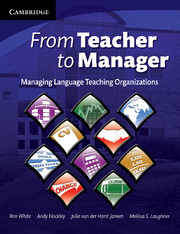
It is an exciting day for me. Well it's not actually much different from most other days to be honest, but I'm trying to build this up in my own mind a little. The reason is that this book is (I believe) officially published today. It's a cracking read, a real unputdownable, page-turning potboiler, and it it ought to be on everyone's christmas stocking wishlist. It's perhaps not going to win the Booker Prize, though it would be nice to be nominated.

I haven't actually seen a copy of it, and have no idea when I will (I'm supposed to be getting some, sometime), but it is out today. I think when a title of this magnitude and of this universal interest comes out, the authors are expected to do the breakfast TV shows, appear at book signings around the country and just generally lap up their celebrity status. Strangely I haven't yet been asked to do all that media-whoring. No idea why.

Seriously though, I think with every copy sold I make something massive like 70p. So go crazy, buy three or four, and with my vast royalty cheques I'll buy you a bottle of Ciuc one day.

Writing for CUP was something of a long drawn out experience with a drafting process taking in 4 different stages (ie I was sent the pages to review 4 different times) a dedicated editor, someone looking up references to check that we really did quote properly, etc etc. We started writing the bloody thing two years ago. Contrast with the process when I wrote the book pictured to the left, which was published by Polirom - a very well respected Romanian publishing company - the process of which was basically signing a contract and then letting them get on with it - someone did go through it and proof read it, I know because there were a few typos in my document that were dealt with before it emerged, but I certainly wasn't involved, and it only took them a month between getting the book for the first time and it appearing in a genuine bound-and-all copy

Anyway, I might permit myself a small glass of something to celebrate later.

Thursday, March 13, 2008

About a Toy

I feel like my last few posts have gone a bit much down the nationalism/anti-nationalism path so I thought for a bit of light relief I'd recount the stories of three toys/children's playthings that have caught my attention recently.

The first of these is a toy that Bogi owns which is one of those plastic boards with holes in in which you can make pictures with different coloured pegs. I presume those things have a name, but I don't know what it is. Anyway this one is Chinese and the box is covered in various pieces of "information" in English, which is obviously somewhat offbeat. Nothing particularly new there, obviously, but one of the important selling points of this particular item is that it "Grows in interest and creativity the sex". (I wanted to take a photo of it but my camera is crap at that kind of close-up work). Now, Bogi is 8. I don't want her to grow in interest and creativity the sex. Well, I hope she does one day, but not for a good few years yet. What is this slogan saying about us as a people? I don't know, you can buy vibrating cock rings in my local Merkur supermarket these days too (true). What next? [After, a great deal of pondering I have come to the conclusion that the original phrase thus butchered probably meant something more along the lines of "This is a good toy for both girls and boys"]

The second is one which I haven't seen in the flesh (or in the synthetic polymer, I guess), but it is advertised quite often on one of the cartoon channels that we have. This is "wethead". Basically it is a plastic helmet with lots of rods sticking out of it. You fill it with water, put it on, and then spin it around. You (or your friends) then remove one of the rods, which may or may not cause you to be drenched with water. It is, with very few modifications, a way of teaching children about the joys of Russian Roulette. Is there a teenage version where you "just" break an arm if you are unlucky, or does one have to go straight from wethead to The Deerhunter?

The third is not exactly a toy, but a book. This is the very small children's version of that popular Disney classic "The Little Mermaid" (yes, I know). Anyway, this book, finely crafted from the finest thick cardboard to thwart attempts to destroy it by illiterate toddlers or exasperated parents, is not very long so I will recount the story in its entirety to you here.

Ariel is a mermaid. She has many friends in the sea. (picture of mermaid, crab (I think), fish, and seagull) Flounder is Ariel's best friend (picture of cartoon fish). Sebastian loves music (crab, or feasibly lobster). Scuttle likes to joke around (seagull holding fork, for unknown reason). Ariel chooses to live on land with Prince Eric. (kiss)

Wow. What a brutal ending. Very brave of the authors to go with the "no plot" approach. Obviously there is some in depth character development, but suddenly we reach the traumatic denouement of what passes for the story. What brought on this abrupt lifestyle change? What of her so-called friends, so cruelly abandoned? We will never know. One is left with a sense of alienation, of tragedy, and of the desperation of the migrant experience. In the end, the reader is asked all the right questions relating to the very contemporary theme of assimilation and what it means for identity. In the end we realise that the author's minimalist approach to plot and storytelling is a device intended to ensure that we are not distracted by extraneous information. He or she has taken Hans Christan Anderson's timeless classic and re-imagined it for the 21st century. The crux of the matter is presented in sharp detail, and the reader is invited to make up his or her own mind. I don't know if it was in the shortlist for the Booker Prize in whatever year it was published, but it really ought to have won.

Thursday, December 20, 2007

Dracula

I had been meaning to re-read Dracula for ages. It was probably 20 years ago when I first read it, and ever since I moved to Transylvania I thought I should probably re-read it since it is basically the only reason that anyone from outside of Hungary and Romania has even heard of Transylvania.

So anyway I read it again last week, and it's bloody brilliant. I remember enjoying it and thinking it was a cracking read when I read it before, and I'm not usually a fan of literature from before 1900 (though to be fair Dracula was written in 1897 so it's not that far off).

Anyway, on to my first major surprise of the book - that is when we first meet Count Dracula in his castle on the Borgo pass between Bistrita and Bukovina. Jonathan Harker (our hero) journeys from Budapest to Cluj and on to Bistrita before heading into the pass, passing as he does various ethnic groups on the way - Saxons, Szekelys, Magyars, and "Wallachs" in the main, but he also mentions "Slovaks" who actually sound very much like the Gabor clan of Rroma from his description, and Szgany (obviously a corruption of Cigany/Tigani) . Anyway, we meet Count Dracula, who is in fact a Szekely! This is not something I had remembered (to be honest when I read the book before, I'd never heard of the Szekely and it would have flown right over my head). He launches into this big speech about the heroism and bravery of the Szekely. He comes up with some curious historical explanation of the Szekely as being some kind of cross between the Vikings and the Huns, and then launches into a list of the invaders and foes they had beaten back - Magyars, Turks, Bulgars, Lombards, Wallachs, and Avars (whoever they are).

"Ah, young sir, the Szekelys - and the Dracula as their heart's blood, their brains and their swords - can boast a record that mushroom growths like the Hapsburgs and the Romanoffs can never reach"
Just in case there are Szekelys reading this (and I know there are) who are now getting a tad upset that this infamous anti-hero is a Szekely, I should point out that he it was because he was such a great leader, and a strong and intelligent warrior when he was alive that he is so powerful and successful a vampire once he became un-dead. At least that's what it says in the book.

So anyway, I'm not going to retell the book, but I thought I'd do a little bit of digging into how Stoker came to write this novel and set it where he did, with the characters that he did. Firstly it's not thought that he ever visited Transylvania, he just spent a lot of time in the library doing research. He apparently first thought about setting the novel in Austria, but was told that it might be too close to another vampire novel called "Carmilla" set in France, so he decided to relocate it to Transylvania. (Though in fact very little happens in Transylvania in the book - just the opening and closing. The rest is in Whitby and (mostly) London).

The character of Dracula himself is often thought to be have been based on Vlad Tepes ("the Impaler") who was also known as Vlad Dracula (son of Dracul). It is now thought that the only thing the character owes to Vlad is the name, and that probably Stoker knew nothing about Vlad Tepes. Another historical character who may or may not have provided some inspiration is a Hungarian countess named Elizabeth Bathory. "The most infamous serial killer in Hungarian and Slovak history".

The tourist industry of Romania seems to rely very greatly on this one story, which is quite impressive in a way, though extreme lengths are gone to - Bran Castle, which I read somewhere is Romania's most visited tourist attraction, markets itself as "Dracula's Castle", based on the disputed possibility that Vlad Tepes may once have spent the night there. Don't get me wrong, Bran Castle is a nice place, but it has about as much connection to Dracula as the Sydney Opera House does. Sighisoara, which is Vlad Dracula's birthplace, is littered with Dracula Internet Cafes and Vampire Coffee Shops. There was even going to be a Dracula themepark outside Sighisoara, which thankfully got nixed. Apparently someone has even built a castle cum hotel on the Borgo pass where they think the castle might have been in the book.

I reckon the Szekelys need to grab a slice of this lucrative pie and set up some "Real Dracula" attractions. There's money in this myth.

Monday, November 12, 2007

Buy this book

The one you can see here

Some of the early reviews (none of which are made up in any way):

"This is quite definitely the only and most exciting book I have ever read on the subject of Educational Management."

"I imagine Hollywood executives are, as we speak, fighting tooth and nail over the filming rights"

"I couldn't put it down. Though that may have something to do with this damned straightjacket"

"When the author asks, on page 101, "If the number of students per class is set at a maximum of 12, tuition is fixed at 75 per student, and all other variables remain the same, what number of students per class is needed to reach breakeven?" the reader is transported by the power of the words, the imagery conjured up, almost into the spreadsheet itself. I loved it."

(PS. Sorry I'm still not blogging that regularly. I'll do better in future. Promise)

Wednesday, December 06, 2006

Brought to book

Like a bus, you can wait years to be tagged and then loads come all at once. And so it is, that I have once again been tapped on the shoulder and become "it". This time by Mirona at Cheezy Cheeky, to name One Book.

Now obviously I want to regale you with pages about all the fascinating books you should read, to (a) make sure you understand that I've read a lot of books; and (b) attempt to brainwash you into thinking like I do about important world issues, but this does not fit into the rules, which are as follows:
  1. Once nominated, name one book you'd recommend wholeheartedly and explain your choice within one paragraph.
  2. Nominate three people that you'll introduce to your readers in one paragraph.
  3. Let these people know that they've been tagged.
  4. Refer back to the person who tagged you, so that readers can travel back as well.

So, here goes. I've plumped, after much turmoil, for a novel. "The History of the Siege of Lisbon" by Jose Saramago (I read it in the translation done fantastically by Giovanni Pontiero). Saramago is a brilliant writer and I'd recommend all his novels, but this one in particular drew me in and turned me inside out. The story is of a proofreader who changes one word in a text about the siege of Lisbon in 1147, and the ripple effect that this act has - mostly on his own life. It is a love story, it is a study of language and its power, and it is a historical analysis of Portugal. It is, in short, completely and fantastically brilliant. And you should all go out right now and beg, borrow, or steal a copy from somewhere. It starts slowly - but this ends up being part of its charm. Believe me.

So, I'll pass this on to Romerican, who is probably too busy to read at the moment but who could maybe spare a few minutes now Christmas is nearly here; Paul, who is the Internet's most prolific Ulsterman living in Hungary; and Catherine who writes about the Balkans, music and London (not necessarily in that order).